




Table of Contents
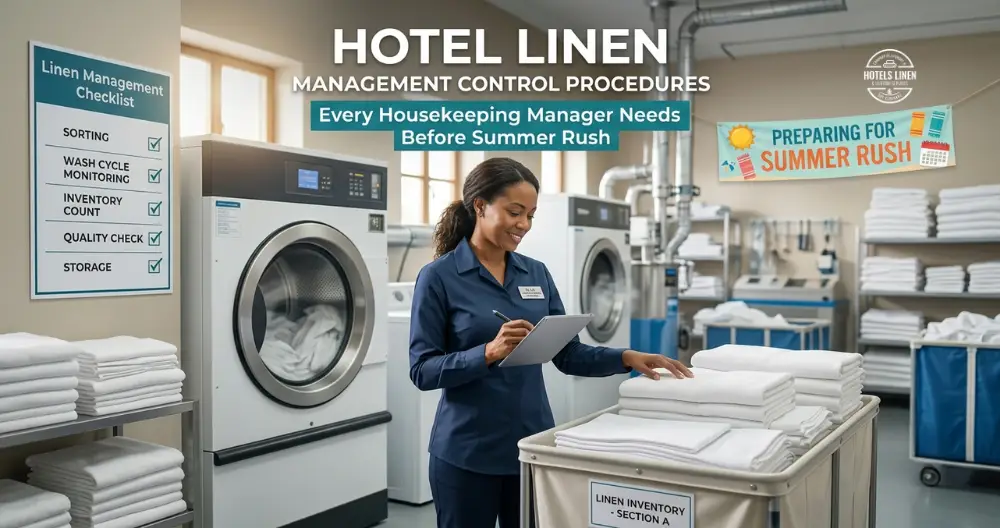
As summer approaches, those running hotel housekeeping departments know exactly what to expect, a crowded hotel, more rapid check outs, and sheets coming in and out faster than the staff can keep track. Linen control is important year round, but especially during peak season. Sheets have to be replaced more frequently, and over the summer the costs for laundry operations become constrained as more hotels join the laundry operations market.
This guide is for housekeeping managers who want to get ahead of that chaos. With practical, easy-to-follow hotel linen management steps you can start using right now.
Why Linen Control Matters More Than You Think
Most hotels don’t realize how much money they lose on linens until they audit their inventory. Linen loss, damage, and over-replacement quietly add up to thousands of dollars every season.
Here’s a quick look at what poor linen management actually costs:
Problem | Impact |
No par level tracking | Over-ordering or running out at peak times |
No linen audit system | Missing linens go unnoticed for weeks |
Wrong replacement schedule | Linens replaced too early or used too long |
No loss accountability | Staff and guests cause damage without records |
Inefficient laundry routing | Delays during high-occupancy days |
Getting your hotel linen control procedures right before summer starts is one of the smartest operational decisions you can make.
Step 1: Set Your Par Levels First
PAR level is the standard quantity of linen needed to keep your operation running smoothly. In the hotel business, the standard recommendation is 3 PAR, so one set is in the room, one set is in the laundry, and one set is in storage.
During high activity times, some hotels choose to up the recommendation to 4 PAR.
How to calculate your par level:
- Count all rooms in use
- Multiply by the number of sets needed per room per day
- Add a buffer (10-15%) for damaged or lost items
- Factor in laundry turnaround time
Set your standards in writing once you understand the metrics. Each member of the housekeeping team should know the par levels for sheets and pillowcases, towels, and bath mats.
Step 2: Build a Linen Inventory Tracking System
You can’t manage what you don’t measure. A proper linen tracking system for hotels doesn’t need to be fancy, it just needs to be consistent.
Basic tracking options:
- Manual count sheets – Works for smaller properties. Daily counts by room and linen type.
- Barcode scanning – Attach barcodes or RFID tags to linen bundles. Scan in and out of laundry.
- Housekeeping software – Many PMS systems now include linen tracking modules.
- Spreadsheet logs – Simple but effective if updated daily.
What to track:
- Total linen count per category
- Items sent to laundry (date and quantity)
- Items returned from laundry
- Items flagged as damaged
- Items removed from service
Even a basic daily log will show you patterns like which days linen loss spikes or which room types burn through towels the fastest.
Step 3: Create a Clear Linen Room SOP
A linen room SOP (Standard Operating Procedure) is a written set of rules for how linens are stored, distributed, and collected. Without one, every staff member does things differently, and that’s where mistakes happen.
Your linen room SOP should cover:
- How clean linens are organized on shelves (by type, size, and room)
- How many sets are issued per room per day
- What happens to linens flagged as stained or damaged
- Who is responsible for end-of-day counts
- How discrepancies are reported
Post this SOP inside the linen room. Review it with new staff during onboarding, and revisit it before each peak season.
Step 4: Set a Hotel Linen Replacement Schedule
Replacing linens too early wastes money. Replacing them too late means guests are sleeping on worn-out sheets and that shows up in your reviews.
General hotel linen replacement guidelines:
Linen Type | Average Lifespan | Replace When… |
Bed sheets | 150-200 washes | Thinning, pilling, or permanent stains |
Pillowcases | 150-200 washes | Yellowing, tears, or visible wear |
Bath towels | 100-150 washes | Fraying edges, rough texture, color fading |
Bath mats | 80-100 washes | Loss of grip backing or shape |
Duvet covers | 100-150 washes | Fabric thinning or zipper damage |
Track wash counts if possible. If not, do a seasonal quality check before summer and before the holiday season and pull anything that doesn’t meet your standard.
Step 5: Put Linen Loss Prevention Measures in Place
One of the largest concealed expenses of hotel laundry management is linen loss. While some loss is inevitable, much of it is not.
Common causes of linen loss in hotels:
- Guests taking towels or small linens home
- Linens accidentally thrown out with trash
- Mix-ups with neighboring hotels using the same laundry service
- No accountability when linens go missing
- Poor handoff procedures between housekeeping shifts
How to reduce linen loss:
- Stamp or embroider your hotel’s name on all linens
- Count linens before and after each room service
- Use a checkout checklist that includes linen count
- Brief your laundry vendor on your specific linen marking system
- Record all losses in a monthly linen loss report
Even reducing loss by 10-15% can make a real difference in your annual linen budget.
Step 6: Streamline Your Hotel Laundry Operations
How you handle laundry logistics directly affects linen availability. During summer when rooms are turning over fast, delays in laundry turnaround can leave your staff without clean linens at exactly the wrong moment.
Tips for smoother hotel laundry management:
- Plan laundry pickup and delivery timings around your check-in/out schedule
- Separate the heavily soiled items from the regular washing load
- Don’t allow dirty linen to build up! Establish a pick-up schedule, even on days with low occupancy
- Inform your laundry/linen service about the changes in your usual pick-up/drop schedule, especially days with high service demands
- Maintain a small stock of emergency backup linen
If you outsource your laundry to a hotel laundry service, make sure your vendor knows your summer occupancy forecast in advance. Good vendors will adjust capacity for you but only if you tell them early enough.
Step 7: Train Your Team on Linen Handling
Your SOPs are only as good as the people following them. A quick training session before summer covers a lot of ground.
Cover these basics in your linen training:
- Correct folding and storage techniques
- How to spot and report damage
- Proper handling to avoid cross-contamination
- What counts as “out of service” linen
- How to fill out daily linen count sheets
A 30-minute refresher before peak season can prevent weeks of headaches.
Common Hotel Linen Management Mistakes to Avoid
Even experienced housekeeping managers fall into these traps:
- Not adjusting par levels for seasonal demand – What works in January won’t work in July
- Skipping daily linen counts – Small discrepancies become big losses over weeks
- Using one replacement timeline for all linen types – Different items wear at different rates
- Not communicating with the laundry vendor – Surprises during peak season hurt everyone
- Ignoring guest feedback about linen quality – A single review mentioning rough towels is a signal
How Hotels Reduce Linen Replacement Costs
Beyond tracking and training, here are a few practical ways to make your linen budget go further:
- Buy commercial-grade linens – They last significantly longer than retail alternatives
- Use the right wash temperatures – Too hot degrades fabric faster
- Avoid overloading washing machines – It causes uneven wear
- Address stains quickly – The longer a stain sits, the harder it is to remove without damage
- Partner with a quality laundry service – Rough handling and wrong chemicals destroy linens faster than guest use
- eco-friendly laundry practices – that are gentler on fabrics while maintaining full hygiene standards
The right laundry partner handles your linens with the care they deserve using the right chemicals, the right temperatures, and the right processes every time.
Frequently Asked Questions
What is the standard linen par level for hotels?
Most hotels use the 3 par system, meaning 1 is in the room, 1 is in the laundry, and 1 is in the storage. During busy seasons, such as the summer, hotels usually operate on a 4 par system.
How do hotels track linen inventory?
Hotels usually operate on a mixture of a manual count sheet, barcodes and/or an RFID system, housekeeping software, and/or spreadsheets. Consistency is most important.
How do you reduce linen loss in a hotel?
You can reduce linen loss by doing the following: name all linens, count every room service, keep a linen loss log, and teach your laundry vendor your marking system. Loss is reduced by accountability of every step.
What is a linen room SOP in housekeeping?
It ensures every team member handles linens the same way, which reduces errors and loss.
How often should hotel linens be replaced?
Bed sheets and Pillowcases should be replaced after 150-200 washes and towels should be replaced after 100-150 washes. Items should be replaced after visible signs of wear and staining that won’t wash out.
Work With a Laundry Partner Who Gets It
How linens are cleaned is the first step to managing them well. Hotels Linen and Uniform Services was developed for hospitality businesses and has won awards for being the best dry cleaners in Chicago. They have more than 50,000 sq. ft. of space for laundry and dry cleaning; they have the most up to date technology; and they have the most eco-friendly practices for cleaning.
We want to help you keep all your rooms ready for your guests, whether you want us to help you manage the quality of your linens as you prepare for a busier than normal summer, or you just need a dependable daily laundry service.
📞 Call us at (312) 927 2555, (312) 259 0747 or email us at contact@clean-linen.com and make sure your linen operations handle everything your busy season brings.